
interesting use of satellite photos and search frequency - Printable Version
+- The CardBoard (https://thecardboard.org/board)
+-- Forum: Emergency (https://thecardboard.org/board/forum-11.html)
+--- Forum: Covid-19 (https://thecardboard.org/board/forum-12.html)
+--- Thread: interesting use of satellite photos and search frequency (/thread-19866.html)
+- The CardBoard (https://thecardboard.org/board)
+-- Forum: Emergency (https://thecardboard.org/board/forum-11.html)
+--- Forum: Covid-19 (https://thecardboard.org/board/forum-12.html)
+--- Thread: interesting use of satellite photos and search frequency (/thread-19866.html)
interesting use of satellite photos and search frequency - 82lsju - 06-09-2020
interesting use of satellite photos and search frequency on when COVID-19 was maybe first ramping in Wuhan
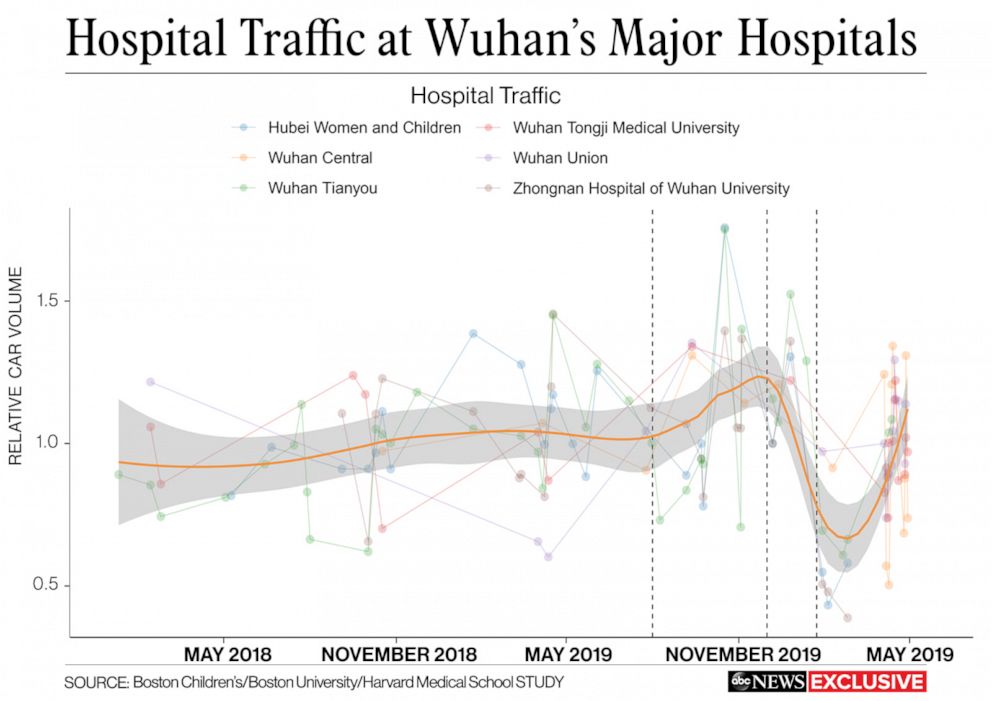
Quote:"Using techniques similar to those employed by intelligence agencies, the research team behind the study analyzed commercial satellite imagery and "observed a dramatic increase in hospital traffic outside five major Wuhan hospitals beginning late summer and early fall 2019," according to Dr. John Brownstein, the Harvard Medical professor who led the research.
Brownstein, an ABC News contributor, said the traffic increase also "coincided with" elevated queries on a Chinese internet search for "certain symptoms that would later be determined as closely associated with the novel coronavirus.""
https://abcnews.go.com/International/satellite-data-suggests-coronavirus-hit-china-earlier-researchers/story?id=71123270
RE: interesting use of satellite photos and search frequency - burger - 06-09-2020
This is f***ing bullsh**. I'm supposed to believe that they had a covid-19 outbreak last October that was big enough to show up in satellite imagery and internet searches, but it didn't spread anywhere else until January?
Not a chance.
Also, that graph in the article is one of the worst I've ever seen. The trendline is horribly overfit (i.e. there's no trend here).
The link in the article isn't working but it looks like a preprint or unpublished report.
RE: interesting use of satellite photos and search frequency - 2006alum - 06-09-2020
Yeah, that research seemed pretty preposterous to me too. The best part is the way the labels for the years isn't even right, unless I missed something and we're reliving 2019 all over again:
RE: interesting use of satellite photos and search frequency - fullmetal - 06-09-2020
Just to be sure, I'd like to see the corresponding trendline for 2018-2019 overlaid as well to make sure seasonal effects were not being implicitly excluded.
RE: interesting use of satellite photos and search frequency - 82lsju - 06-09-2020
(06-09-2020, 10:12 AM)fullmetal Wrote: Just to be sure, I'd like to see the corresponding trendline for 2018-2019 overlaid as well to make sure seasonal effects were not being implicitly excluded.
a little more info here
https://dash.harvard.edu/bitstream/handle/1/42669767/Satellite_Images_Baidu_COVID19_manuscript_DASH.pdf?sequence=3&isAllowed=y
RE: interesting use of satellite photos and search frequency - 82lsju - 06-09-2020
(06-09-2020, 09:30 AM)2006alum Wrote: Yeah, that research seemed pretty preposterous to me too. The best part is the way the labels for the years isn't even right, unless I missed something and we're reliving 2019 all over again:
looks like the labels on the graph were put on by ABC, the graph in the paper (on the last page) has the correct dates in much smaller type
https://dash.harvard.edu/bitstream/handle/1/42669767/Satellite_Images_Baidu_COVID19_manuscript_DASH.pdf?sequence=3&isAllowed=y
RE: interesting use of satellite photos and search frequency - Snorlax94 - 06-10-2020
I think it’s an interesting paper. In general, we are moving toward a world where people can use data to know things about you before you know them about yourself.
I warn people, we are in a world where Google/FB may know you have cancer before you do. People say, that’s great! Then they can tell me. And I reply, but what if, even unbeknownst to Google, the highest bidder for this information is your employer, who may lay you off, your creditors, who will stop extending you credit, and your private medical insurers, who will try to dump you (or may even pay for ads to foist you onto their competitors).
What I take away from the paper is that the US federal government probably had more data on what was happening in China before China did, and even now, probably have novel data about what happened when that even China does not know, and they had extraordinary advance warning, but they ignored the warnings from security and health experts, because they are that self-destructive, that hostile to facts and expertise, and that incompetent.