


08-26-2020, 04:10 PM
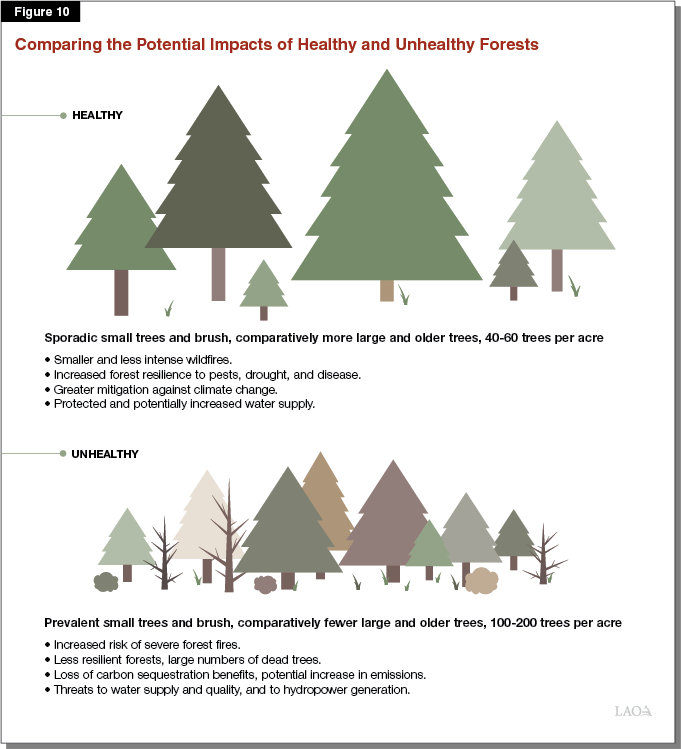
The "dry" source (no pun intended) that GR originally cited actually has some useful illustrations in it. The one below seems to indicate that the increased density is not a lot more mature trees, but a lot more brush and small trees. A quote is "As discussed earlier, woody biomass typically is not useable in traditional lumber mills. This is because these byproducts of timber harvest or thinning operations may be of an undesirable species, too small in diameter for lumber production, or malformed. Historically, much of this excess forest product was burned to produce bioenergy." Hard to know exactly though without numbers.
On the plus side, there is an example in there of newer technologies like Cross-Laminated Timber that can use smaller trees to produce a commercially viable product.
On the plus side, there is an example in there of newer technologies like Cross-Laminated Timber that can use smaller trees to produce a commercially viable product.
(08-26-2020, 02:20 PM)BostonCard Wrote: I think what GR meant was not so much clearcutting fire breaks or cutting through shrubs, but thinning out the number of full grown trees, which do have economic value. I haven't fact checked this statement, but:
Quote:The tree population has expanded in the same way. According to the linked report, a healthy forest should have between 40 t0 60 trees per acre. California forests have between 100 to 200 AND massive amounts of small shrubbery, dried leaves and branches, and, of course, a lot of dead trees from the drought and losing the battle for survival. They are tinderboxes just waiting for the right match. Despite the 10 fold increase in population since the 30's, California forests have 30% more trees now than they did 90 years ago. They are, plainly and simply, too damn dense. A couple of commentators have made the ironic point that the excessive amount of carbon dioxide the trees emit actually contributes to global warming. This has nothing to do with which party controls the legislature or who's President. It has taken nearly a century of pretending this wasn't a problem to get here, and it's going to take a long time to undo it.
If he is correct on the facts, then I wonder whether it would be economically helpful to thin parts of the forest back down to the "healthy forest" level.
BC